enLanguage
Search
What is Indoor Tents


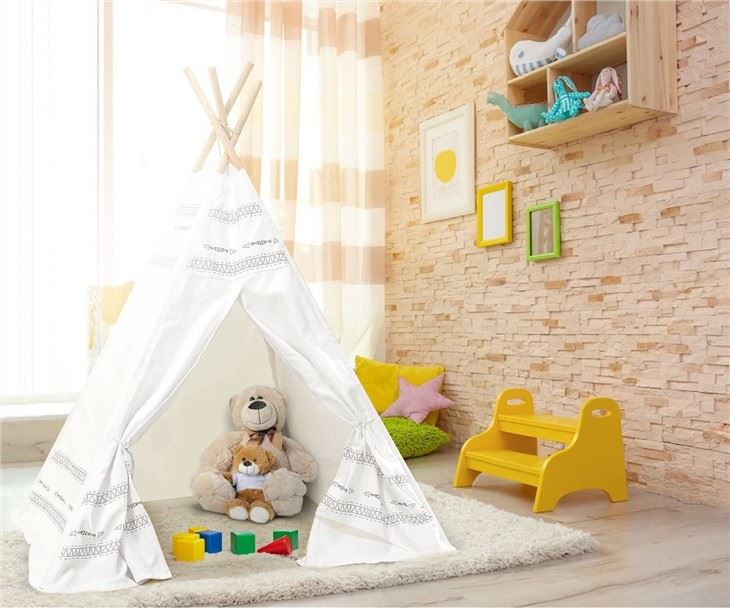
An indoor tent is a small, light, fabric structure that has been designed to feel like a home for your baby. The best comes from either mesh or breathable cloth with a waterproof cover on top. It can be stored and folded easily in its travel bag when not in use, making it ideal for taking on vacation or moving around the house as needed.


Benefits of Indoor Tents


Imagination Set Free
There is not a thing a Indoor tents can't do for your children's play. Since childhood is the period where there is so much to learn, all of it can be done in an entertaining way. Children can let their imagination run wild and transform a tent into a fortress or castle, a house of their own, a hidden chamber, a cave to hide from the dinosaurs, or whatever they set their minds on.


Physical Development
Playing teepee indoor tents requires a lot of movement, crawling and turning, reaching and grabbing, all of which are important for healthy development because they help coordinate the brain hemispheres. Plus, the teepee indoor tents lets kids practice planning their moves as they get in and out of the indoor tents.
Best of all, kids' play teepee indoor tents are the perfect place to place a variety of toys and building blocks, puzzles that require the participation of fine motor skills, which are essential for children to play. Kids love the idea of small spaces and secluded nooks, so teepee indoor tents are the ideal quiet place they need to play away from outside distractions.


Social time
Playing teepee indoor tents is fun for individuals, but the fun can be expanded when others join in. When children play together, they learn how to communicate with each other as they need to negotiate and follow the rules and show consideration for the needs or wishes of others.
In short, they learned how to behave well in society and to understand more about kindness, empathy, and sharing. Also, there is no age limit to play with the kid's teepee indoor tents, so it can be a way for you to get involved and spend some valuable time connecting with your kids and sharing experiences. If they don't know where to start, you can always help them by creating a theme or the beginning of the story to get them to play.


Quiet Time
As mentioned, kids love quiet and safe places, places they can claim as their own, and hide away from the noise of the world that surrounds them, as odd as it may sound given their usual noise-making habits. Not only would they love having a child indoor teepee indoor tents, but you would also too; think of getting that peace and quiet for yourself for a little while during the day – sure makes for a reason enough itself to buy kids teepee indoor tents!


Repurpose
It's not just time they can use to play, you know, remember how easy it is to repurpose them for reading nooks and naps when they're too stubborn to nap in bed and don't want to leave toys and games.


Why Choose us


Cutting-edge technology

We have our own lab in factory to solve the potential risks of new items in development stage, to guarantee to the quality of mass production.


Quality services

Our team is committed to delivering high-quality services to our clients. We use the latest technologies and tools to ensure that our services exceed your expectations.


Quality

We offer high quality services and products that are relatable and resonate with your business needs.


Experience and expertise

Our company has been in business for many years and has amassed significant expertise and experience to provide quality services to our clients.


5 Practical Considerations When Selecting a Indoor Tents
Crown Teepee
 Indoor Tents manufacturers
Crown Teepee
 Indoor Tents manufacturers

Size and Space: The first thing to consider when selecting a indoor tents is the size and space available in your home or outdoor area. Consider the dimensions of the tent and ensure it fits in the space you have available bearing in mind that if it is for outdoors, will the materials be durable enough for this? Also, consider the number of children who will be using the tent and their ages, as this can help you determine what size tent will work best for your needs. Questions to ask are: How many children will likely use this tent? Where will I like to use the tent? Would the indoor tents be a permanent feature in the room or something to pack away later? What size space do I have? What access does the indoor tents have?


Materials and Durability: The materials and durability of the indoor tents are also important factors to consider. Look for a tent made with durable materials that can withstand regular use and rough play. If you're more eco-friendly conscious, look for timber poles from sustainable forestry solutions and for tent canopies that are made from natural fibres, like cotton.


Ease of Setup and Storage: Indoor tents can come in a variety of shapes and sizes, so it's important to consider how easy the tent is to set up and store. Look for a tent that can be set up easily, without the need for complicated instructions or tools. Also, consider whether the tent can be easily stored when not in use, as this can help keep your home or outdoor area clutter-free. Plastics and screws deteriorate over time so avoid tents with many of these features.


Safety and Age Appropriateness: Safety is always a concern when it comes to children's toys, so make sure to select a indoor tents that is appropriate for your child's age and stage of development. It is also important to supervise your child when they are using the tent, especially if they are very young. Consider your child's abilities and match it to the indoor tents function. Indoor tents with additional accessories may or may not compliment your child's developmental stage. A indoor tents that has the opportunity to grow with them is useful for product longevity and sustainability.


Design and Theme: Finally, consider the design and theme of the indoor tents. Indoor tents come in a wide variety of designs, from simple and classic to more elaborate and themed designs. Consider your child's interests and preferences when selecting a indoor tents, as this can help to make playtime more enjoyable and engaging for them. Remember that your child's tastes and play style will evolve over time so consider if a cheaper themed tent is more appropriate or a carefully crafted indoor tents that is user friendly over time is the best investment.


5 Ways To Remove Mold From a Indoor Tents

Hot Water & Soap – Though this is one of the old-fashioned ways of cleaning a indoor tents, it is still one of the most preferred cleaning methods. Just be sure to use non-detergent soap. Mix hot water and the soap to form a foam. Use a sponge or a soft bristle brush to scrub stubborn mold and mildew. Once done, rinse your indoor tents with clean water and let air dry.


Vinegar & Water – It not only eliminates bad smells but vinegar also kills mold. Just mix a cup of white vinegar with a gallon of warm water in a bucket. Use water and sponge to brush off mold and mildew. Rinse with clean water and let air dry when done.

Lemon Juice & Salt

If you don't have vinegar, a cup of lemon juice and a cup of salt is also a good option. Just mix a gallon of hot water with the lemon juice and salt and with a sponge, scrub the mold. Then rinse and let air dry.

Tea Tree Oil & Warm Water

Cleaning your indoor tents with tea tree oil will get rid of not only mold and mildew, but also bad smells. Just add two teaspoons of tea tree oil to a spray bottle and fill with water. Spray the affected areas and use a soft sponge, cloth, or brush to scrub the mold off. Then rinse with warm water and let air dry.

Vinegar & Lemon

Squeeze one full lemon and add a quarter cup of vinegar into warm water. Mix them properly in a spray bottle and use it on the affected areas. Allow the solution to sit before you start to scrub gently, and finally, allow the indoor tents to dry fully.


8 Engaging Ways To Use An Indoor Tent With Your Baby
 

An Indoor Tent Is A Secret Hideout
You can use an indoor tent for secret playtime and family fun activities with your baby. When you need some privacy but still want to keep an eye on your little one, a tent can provide you with both. Simply place the tent in the corner of the room, move the furniture away and plug in a soft nightlight. Your baby will love hiding from prying eyes with their favorite toys.


A Indoor Tent Makes a Wonderful Reading Nook
You can bring books from home and read to your baby in the tent with the minimal interruption—the perfect time to read it is at night, before bedtime. Babies will love sneakily peeking at you through a small hole or even looking out the window to see what you are reading. At bedtime, place a blanket over the entrance and make sure you keep it closed until your baby is asleep.


An Indoor Tent Is A Place To Freely Express Big Emotion
Babies process emotion differently than full-grown adults do, which means they can have outbursts that seem scary to the people around them. While this is not abnormal and should not be discouraged, it can be overwhelming for new parents. An indoor tent makes a safe place for your child to express all of their big emotions safely.
When your baby is having a meltdown or is just tired of being out, take them inside the tent for a brief period. It gives you a chance to give them some space for whatever feelings they may have, and it helps you not get frustrated! Remember that toddlers love routine and consistency, and the tent can become part of their daily life.


Use the tent As A Safe Play Area For Baby
Your baby must get plenty of playtime during their first few years. And although a “play area” outside of the home is best, it is not always possible to arrange this in your home or apartment. An indoor tent makes an ideal space for babies to play with their toys and explore independently. It is a great opportunity to develop your child's gross and fine motor skills, which will be helpful when they start to crawl, walk and play outside.


A Tent Is a Cozy Cocoon
The cozy, warm material of the tent creates the perfect place for an infant to lay down and relax. Babies will love crawling in and pulling the cover over their heads. An indoor tent will create a fun space where your baby can feel secure and listen to soft music as they doze off into dreamland. You can add a small rug and some pillows and witness as the tent becomes your baby's favorite spot to rest.


Use The Tent For Feeding
The tent can be your baby's feeding nook. It is a great place for tummy time as you can keep them contained as they eat and then quickly remove them back into their own space once done. They will easily learn how to manipulate objects, which is a foundation for when they start using real utensils for food. You can also play around with their food when you are in the tent, helping shape what foods they like and how much of it they get without worrying about messes or spills.


Learning Activities
You can turn indoor tents into a learning center for your baby. Play around with the tent and see what your little one does when you change it to different themes and colors. Learning takes on a whole new meaning in a special way with an indoor tent, perfect for infants or toddlers. As they grow older, their curiosity will increase by learning and exploration activities inside, where they can have their own space all to themselves.


An Indoor Tent Is A Good Place to Soundproof
An indoor tent is a great soundproofing tool, especially for babies. Babies' ears are not fully developed at birth, and due to their small size, the noise of surroundings can often be louder and more distracting compared to adults' hearing.
By using the indoor tent, you can ensure that your child will only hear the gentle sounds of nature without causing them any harm. An indoor tent provides a quiet environment with no distractions and helps your child develop better hearing.


Our Factory


Hangzhou Huanyu Group Co., Ltd. is a comprehensive export-oriented group enterprise, founded in 1991.

The compay set up toy division and logistics division two major sections. Among them, the main products of the toy division include plush toys, wooden toys, children's furniture. The factory covers an area of 27970 square meters, and there are more than 600 employees.

We have our own lab in factory to solve the potential risks of new items in development stage, to guarantee to the quality of mass production. We also have a quarterly safety regulation training agreement with external lab to help us fully understand the testing requirements and obtain the new test requirements at the first time. We can do below tests in factory: part of Mechanical and physical test; flammability test; Determination of heavy metals content; Transportation test; drop test; tip-over test; slope stability test; impact test; tension test; salt mist test; color fastness to rubbing; small parts test; shape edge test; staircase tumble test; cut oil test and so on.


202301031511144727a3bd91e149079922492270aff2cc.jpg (340×200)
20230103151117997cce2a2a5d4331a3743ce21c3d489c.jpg (340×200)
productcate-1-1
productcate-1-1
 

2023010315111421cd82943d644bc693d5e4a9f0278a9d.jpg (1050×260)


Certificates We Have
 

BSCI, SMETA, FSC, ISO9001:2015, ICS , CARBON FOOTPRINT


20230103151557297a2d1218e843ab99ce034169ae18a2.jpg (265×375)
productcate-1-1
productcate-1-1
productcate-1-1
productcate-1-1
productcate-1-1


Asked Questions


Q: Do kids like play indoor tents?

A: They are a great way to introduce physical activity into your child's life. Vocabulary: Indoor tents are a great way to encourage your child to communicate and learn new words. They love pointing out the various objects they see while looking at the outside world through their window.

Q: What is the difference between a indoor tents and a play house?

A: Not to be confused with a play house (which is typically a solid outdoor structure made from plastic or wood), a indoor tents is an indoor toy that generally pops up and is made from fabric.

Q: What are the benefits of a indoor tents?

A: Encourages creativity and imagination: Indoor tents can spark a child's imagination and inspire them to create their own imaginary worlds and scenarios. Promotes social play: Indoor tents can encourage children to play together and engage in cooperative play, which helps develop their social skills.

Q: Are kids teepees worth it?

A: From cuddling with their toys to reading books, nap time and playing games, teepees are an excellent way to foster independence and creativity.

Q: Are indoor tents safe to sleep in?

A: She says there are three ways the products present danger to small children. They include an entanglement hazard, the potential of a child getting stuck between the crib mattress and the crib tent, and, the possibility of a pole from the tent becoming dislodged, and puncturing a child.

Q: How do indoor tents work?

A: Indoor tents provide a controlled environment where children can regulate their sensory experiences. It can help them to feel more grounded and focused. By minimising external stimuli, sensory tents can promote relaxation and a sense of calm. They can also reduce stress and anxiety levels.

Q: What is the main purpose of a indoor tents?

A: Tents are usually used as shelter during camping, hiking, and other outdoor recreational activities. Large tents are also used to provide temporary shelter for events such as outdoor weddings or circuses.

Q: Why do kids like building indoor tents?

A: Because kids learn through play, the actions of building a tent helps them to learn and grow. Tent-building provides children with the chance to create their space their world, a world in which they are in charge.

Q: Are indoor tents worth it?

A: Parents like to buy indoor tents for their children because they provide a safe and fun place for the child to play. These tents come in many different designs, so there is one that will fit any child's needs. They also come with lights, which makes them perfect for nighttime fun.

Q: What do indoor tents protect you from?

A: Tents are versatile. They can provide shade in the summer and protection from rain or snow in winter.

Q: Are indoor tents safe for toddlers?

A: Consumer Reports also says that crib tents or any other type of netting should never be used on cribs and that toddlers who climb out of their cribs are safest in a toddler bed or on a mattress placed on the floor.

Q: Why are tents good for kids?

A: Encourages creativity and imagination: Indoor tents can spark a child's imagination and inspire them to create their own imaginary worlds and scenarios. Promotes social play: Indoor tents can encourage children to play together and engage in cooperative play, which helps develop their social skills.

Q: How long do indoor tents usually last?

A: Most indoor tents are designed to last a good five to six years. This is a good amount of time for most people and tends to last. This is especially true if you really take care of your tent. A tent can last much longer if you take proper care of it.

Q: What are the safety precautions for indoor tents?

A: Don't smoke inside tents. Make sure you know how to cut your way out of the tent to escape if there is a fire. Make sure everyone knows how to put out clothing that's on fire – stop, drop and roll. Ensure caravans and tents are at least 6 metres apart and well away from parked cars.

Q: How do toddlers sleep in indoor tents?

A: Bring a nightlight. ...
Stay in the tent until your toddler sleeps. ...
Bring a play yard (or two). ...
Put your tent in a shaded area. ...
Recreate their beds/cribs at home. ...
A new toy or bag with things in it. ...
Get your kids excited about sleeping in a tent. ...
Try to stick with naps.

Q: Does the color of a indoor tents matter?

A: Your color choice can influence the interior visibility of the indoor tents. Although most of our tents are crafted from 16 oz. blockout fabric to shield against sunlight, dark colored tents may cast a more defined shadow compared to light colored tents, affecting the lighting and mood inside.

Q: What are the four different types of indoor tents?

A: Four types of indoor tents which can be characterized by their unique shapes are A-Frame tents, Pyramid tents, Hoop tents , and Dome tents. tents tend not to be very spacious, given their ground surface area.

(0/10)

clearall